I glanced toward him as he watched the houses passing outside.
“I thought when somebody died, everything they did just… stopped.”
“They stop being here physically,” I said carefully. “But their impact doesn’t disappear.”
Caleb nodded.
That evening, he joined me at the dinner table.
Three days later, I returned home to find his friend Noah in our living room.
I almost embarrassed Caleb with my enthusiasm.
“Hi, Noah! Nice to see you here.”
Caleb glared at me. “Ew, Mom.”
“What?”
“You’re being weird.”
“I only said hello.”
“You said it like he’d returned from war.”
Noah struggled not to laugh.
From then on, Caleb improved gradually.
He still had difficult days. Sometimes conversations about Father’s Day made him withdraw, and occasionally I’d find him holding David’s guitar without playing.
But he began communicating again.
His teacher emailed to say he’d volunteered to lead a class project.
He joined a weekend soccer group.
He also started cooking with me, mainly because he insisted my pasta sauce needed “serious intervention.”
One evening, while chopping onions, he said, “Dad used to burn these.”
“He burned everything.”
“He said it was caramelized.”
“He was a liar.”
Caleb laughed so hard he had to set down the knife.
Months later, the youth center organized a community fundraiser.
Marcus invited Caleb to perform.
Initially, he refused.
Two weeks later, he reconsidered.
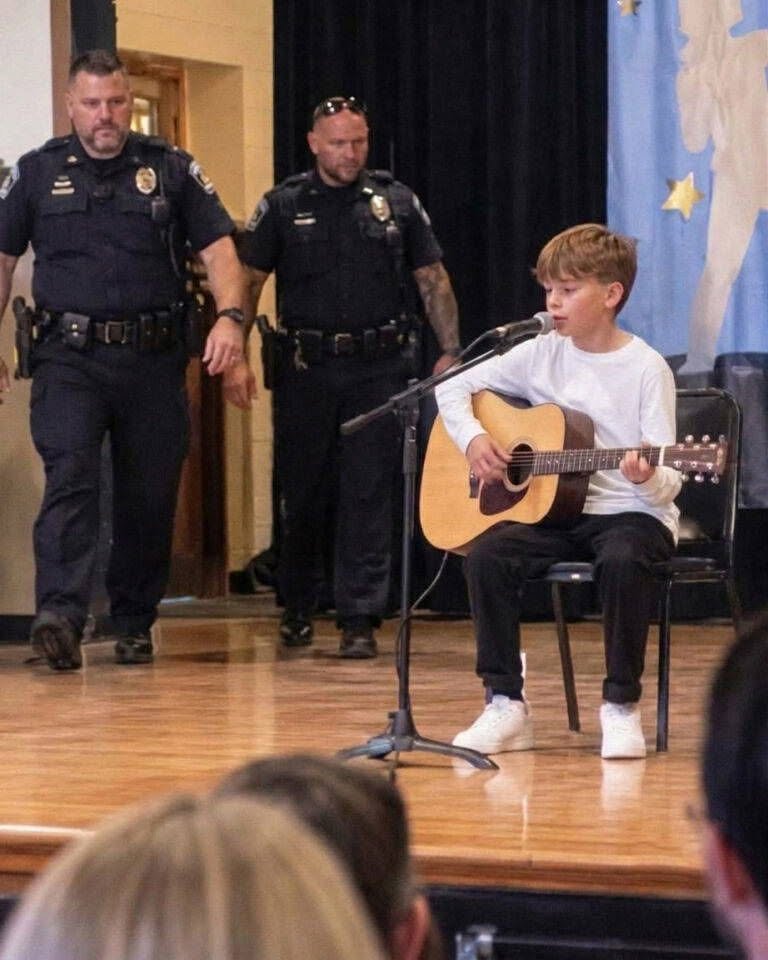
On the night of the event, I stood near the back as Caleb stepped onto the small stage with David’s guitar.
Marcus stood beside me.
“Think he’ll make it through?” he whispered.
“I don’t know.”
Caleb adjusted the microphone, looking nervous.
Then he spotted me.
This time, instead of looking toward the ceiling, he smiled.
“This was my dad’s favorite song,” he told the room. “I used to think it made me sad because he was gone.”
He paused. “Now I think it reminds me he was here.”